- Personal and expert advice
- Fast delivery times
- Competitive prices

 Nederlands
 Deutsch
 Français




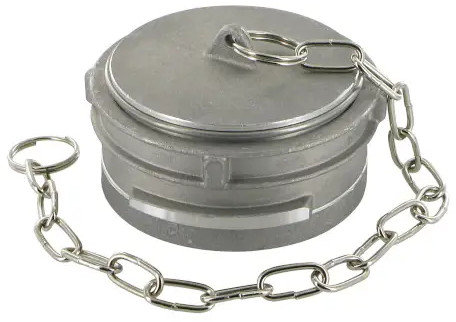
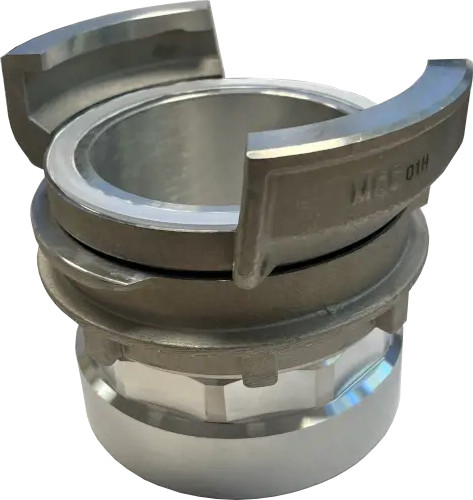
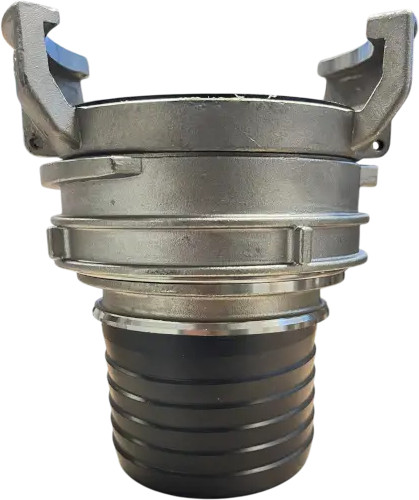
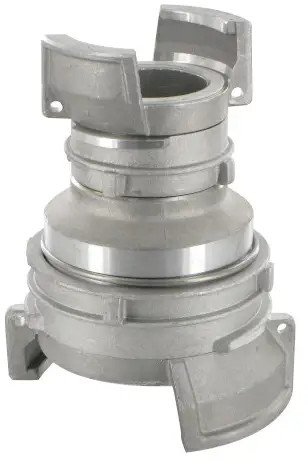
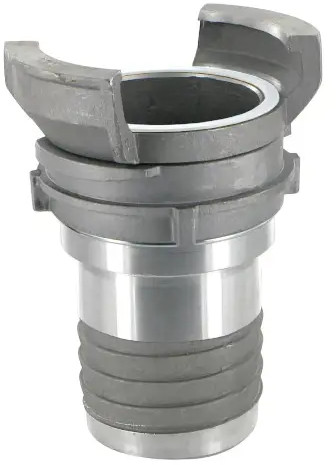
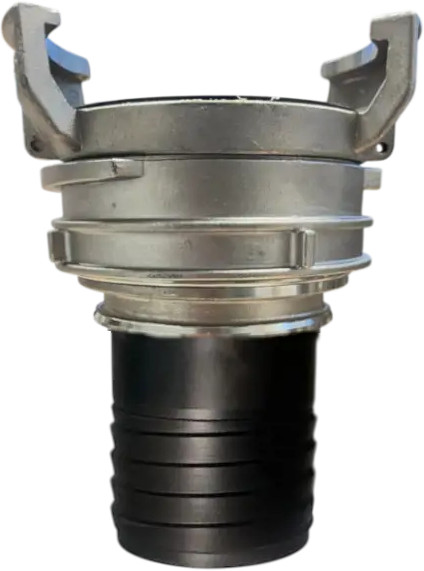
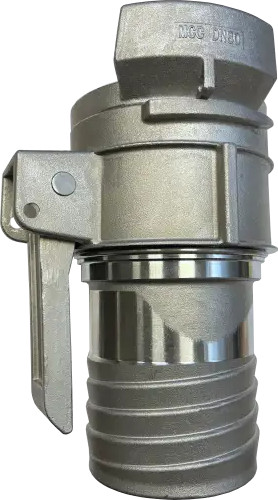
A Guillemin coupling is a symmetrical coupling: both halves are identical. Any half therefore fits any other half of the same size, with no distinction between a male and a female part. That is the essential difference from Camlock or Storz. In France this system is the fire service standard; elsewhere you will also see it called a symmetrical coupling or DSP. NexaParts supplies the full range in stainless steel 316, aluminium, brass and polypropylene, from DN20 through DN150, with or without latch, to NF E 29-572 and EN 14420-8. Alongside the couplings themselves you will find the matching hose tails, threaded connections, blank caps, reducers and loose gaskets, so you can build a complete hose assembly in one pass. We supply from stock to installers, contractors, fire services and the process industry, and advise on the right combination of size, material and seal.
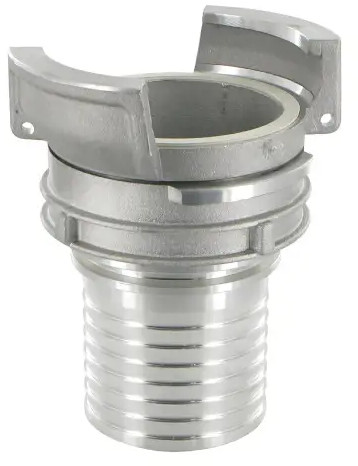
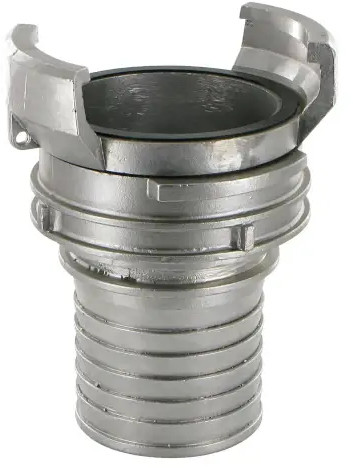
On a Guillemin coupling, two lugs on one half drop into the grooves of the other half. A quarter turn locks the joint, and the flat gasket seated in the face provides the seal. Because both halves are identical, you do not need to stock separate male and female parts. One version per size is enough, which roughly halves the number of line items in your store and prevents wrong orders on site. Connecting and disconnecting is done by hand, without tools. That is why the Guillemin coupling has been the standard in firefighting, irrigation and liquid transfer for decades.
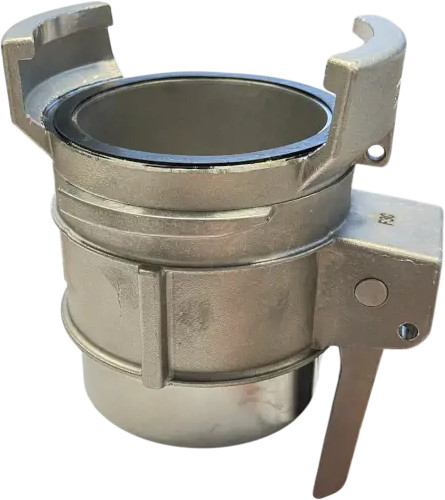
The latch is a pawl that blocks rotation once the joint is closed. Under vibration, pressure surges or pull on the hose it prevents accidental release. For pumps, tankers and pressurised lines a Guillemin coupling with latch is therefore the default choice. The version without latch releases faster and suits temporary set-ups where the configuration changes often, such as seasonal irrigation. Both versions remain fully interchangeable: a half with latch mates without difficulty to a half without latch of the same size. If you are unsure which to order, fit the latched version on the pump side and the open version at the end you move around regularly. That keeps the critical joint secured while the work at the hose end stays quick.
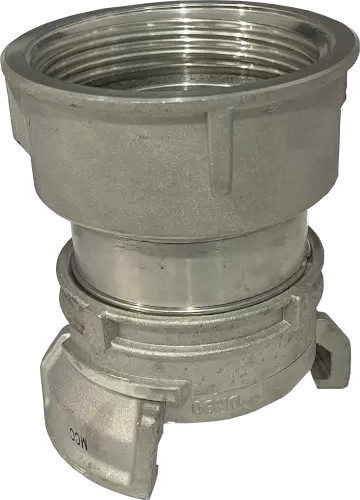
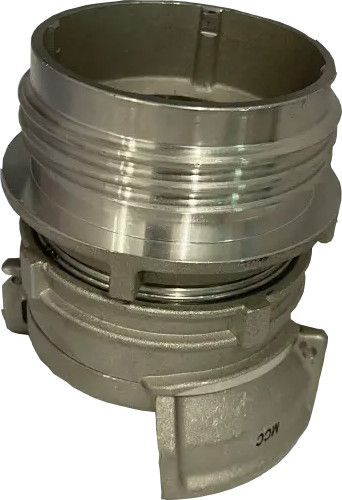
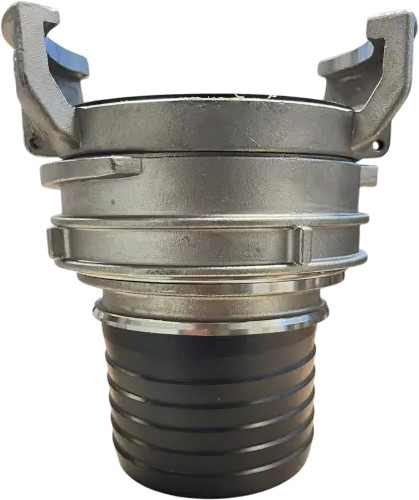
Versions of the Guillemin coupling differ in what sits at the back. That determines what you connect to: a flexible hose, threaded pipework or a fixed installation.
Lug distance decides whether two halves will mate. Two couplings connect only if they share the same lug distance, even when the nominal bore appears to match.
| DN | Inch | Lug distance |
|---|---|---|
| DN20 | 3/4" | on request |
| DN25 | 1" | on request |
| DN32 | 1 1/4" | 44 mm |
| DN40 | 1 1/2" | 56 mm |
| DN50 | 2" | 70 mm |
| DN65 | 2 1/2" | 85 mm |
| DN80 | 3" | 103 mm |
| DN100 | 4" | 123 mm |
| DN125 | 5" | on request |
| DN150 | 6" | on request |
A Guillemin coupling in stainless steel 316 withstands acids, alkalis and steam cleaning, making it the choice for food and chemical duty. Aluminium gives the best strength to weight ratio and stays manageable by hand even in the large bores, which is why fire services and irrigation contractors default to it. Brass suits water and mild chemicals. Polypropylene does not corrode and costs less, but its working pressure is lower: check the figure on the product page. The metal versions are rated at 16 bar.
The flat gasket is the only wearing part of a Guillemin coupling. NexaParts supplies it in EPDM, NBR, FKM, PTFE and silicone from DN20 to DN150, with FDA versions for food contact. Select by medium: NBR for oils and fuels, EPDM for water and steam, FKM for high temperatures and solvents, PTFE for aggressive acids. A hardened gasket starts to weep at the face long before the coupling itself is worn out, so replace it before it fails.
Firefighting and fire safety, agriculture and irrigation, construction and dewatering, process industry, road tankers and liquid transfer. Looking for a cam and groove system instead? See our camlock fittings.
What is a Guillemin coupling? A symmetrical quick coupling with lugs and grooves that closes with a quarter turn and whose halves are identical.
Does it fit a Camlock? No. Camlock uses separate male and female parts; this system is symmetrical. An adaptor is required.
Is it the same as a fire hose coupling? In France, yes. In Germany the Storz coupling holds that role, so check which standard your site uses.
Which gasket do I need? That depends on medium and temperature. NBR for oil, EPDM for water and steam, FKM for heat and solvents, PTFE for acids.
Didn't find the right Guillemin Couplings?
Fill in the form below, and we'll assist you further!
Curious about our blog? Check out all our items here!
Contact us here