- Personal and expert advice
- Fast delivery times
- Competitive prices

 Nederlands
 Deutsch
 Français




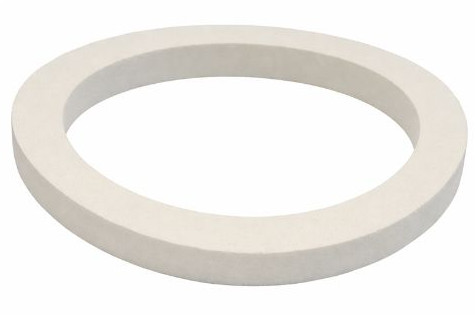
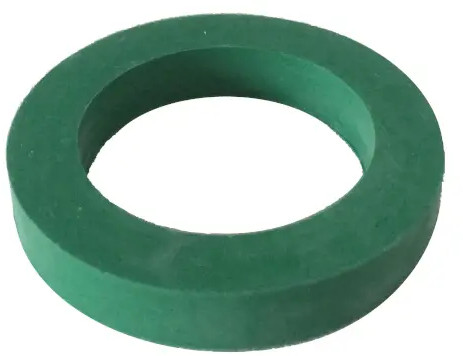
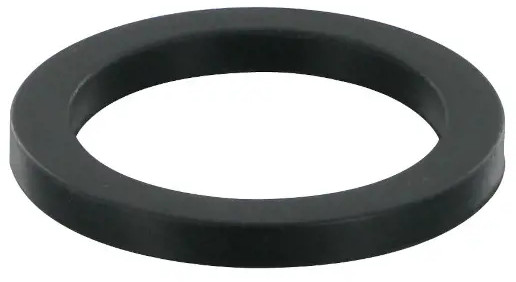
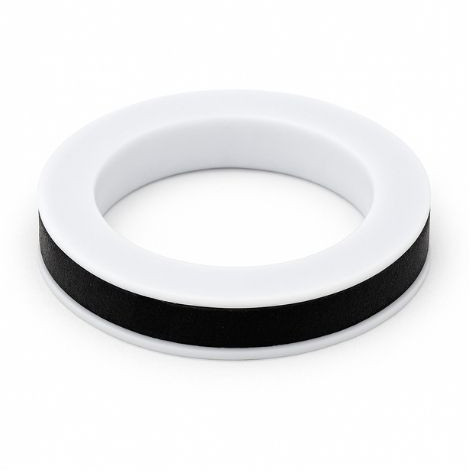
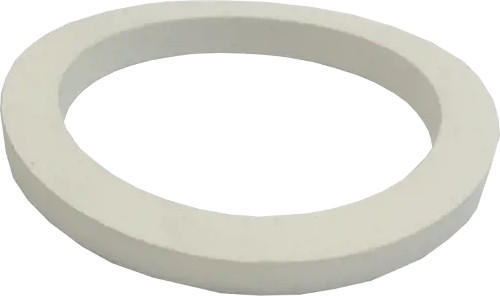
The camlock gasket is the flat ring seated in the female part of the coupling. It is the only wearing component in the whole system: the body lasts years, the gasket considerably less. When a camlock joint weeps, the gasket is almost always the cause and not the coupling. NexaParts supplies the camlock gasket from DN13 to DN200 in EPDM, NBR, Viton and PTFE, singly or by the set. You order it on two details: the size and the compound. Size follows from the coupling, compound from the medium and the working temperature.
Make the choice on medium and temperature, never on price. NBR suits oils, fuels and hydrocarbons but degrades quickly under steam. EPDM is the reverse: excellent on water, aqueous solutions, steam and many cleaning agents, but attacked by mineral oils. Viton, also known as FKM, covers high temperatures, solvents and many aggressive chemicals. PTFE resists almost everything including concentrated acids, at the cost of compliance. For food duty choose an FDA approved version, because the camlock gasket determines food contact suitability and not the coupling body. A wrongly chosen gasket swells or hardens within weeks, while the right one lasts the full maintenance interval.
Four signs of a worn camlock gasket are visible to the naked eye. The gasket has hardened and no longer springs back when you press it with a finger. The surface shows fine cracks, often radiating around the contact zone. The gasket has swollen and stands proud of its groove, a sign of chemical incompatibility. Or it carries a permanent, flattened and shiny impression. In all four cases replace it without waiting for the leak: a weeping joint eventually attacks the seat in the body, turning a spare worth a few euros into replacement of the whole coupling. Check the gasket briefly at every disassembly; it takes seconds.
Replacement is done by hand, without tools: the old ring lifts out of the groove and the new one presses in. Take the opportunity to clean the groove and check it for deposits or scoring, because a damaged groove will not seal reliably even with a new camlock gasket. Keep one set per size in use and two sets for the bores you strip down often, and store the spares out of direct sunlight, since UV and ozone age elastomers on the shelf just as surely as service does. On scheduled inspection, replacing preventively always costs less than a failure in the field: a ring costs a few euros, while a spill on a loading bay costs a shift of cleaning and a report. Where a line runs continuously, tie the replacement to the maintenance interval rather than waiting for a visible leak.
A camlock gasket is size specific: a DN50 ring will not seat in a DN65 groove, and a ring that is slightly too small will appear to fit while sealing only over part of its circumference. Check the size stamped on the body before ordering, and quote the part code rather than the inch figure alone, since the code already carries the size in hundredths of an inch. Only the female part needs a gasket; male parts have none, which also means that on a leaking joint you must always open the female half regardless of which side the drips appear on. When you order a full set, count the female halves in the line rather than the couplings, because a DC dust cap seals against a male part and therefore carries a ring of its own.
See the full range on our camlock couplings page.
Didn't find the right Camlock Gaskets?
Fill in the form below, and we'll assist you further!
Curious about our blog? Check out all our items here!
Contact us here